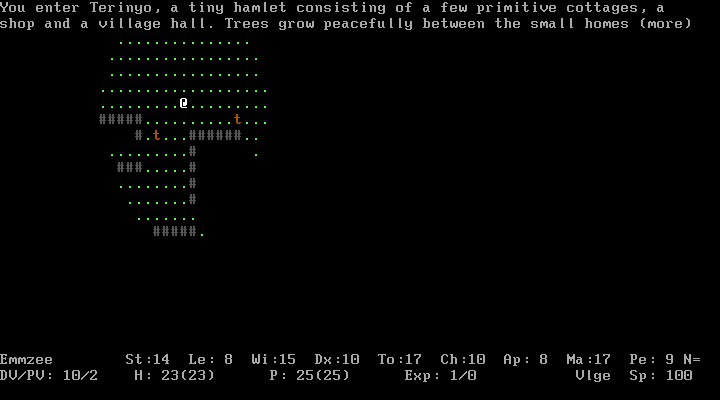
If you enjoy Roguelike games, you'll want to try this one. (Its full name is "Ancient Domains of Mystery".) It features primitive ASCII graphics (like most Roguelikes) but it is very indepth, even more so than Nethack. The game takes place not only in dungeons, but on the overworld and in towns as well. It is constantly being updated, so you may want to visit the ADOM homepage to check for new versions.
Also known as "Ultima 0", this is the game that launched Richard Garriott's career, and was one of the first real RPGs. Severely antiquated graphics & gameplay (by today's standards) aside, this is a real piece of gaming history. And, truth be told, simplicity aside, it's not that bad. There is not much story: Your quest (which you should get from the kind Lord British) is simply to slay a monster. (This game was recently freely released.)
I'm not particularly fond of this type of RPG, however, if you like the old-style 1st person hack'n'slash type, you might want to try this one. It has VGA graphics and SB sounds, but I didn't find it very enjoyable ... one part I found particularly annoying the game's lack of a map.
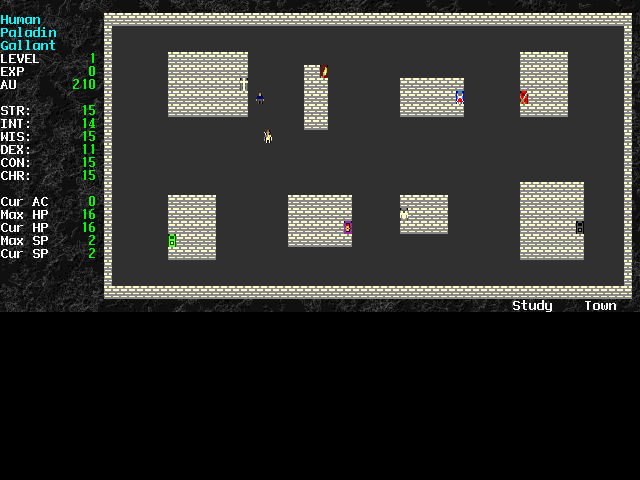
Angband began as a variant of the Roguelike game Moria, and eventually became so modified and unique that it now stands alone (and has variants of its own like ZAngband). Like Rogue, Nethack, etc Angband features very indepth gameplay and randomly generated dungeons. The most current version includes tiled graphics by default, and you begin the game in a simple town. Note that this game has a huge learning curve and is only for hardcore RPG type players!
DarkPhear is a console-style RPG with decent graphics and sound effects (especially considering it was programmed in QuickBasic!). The game begins with a simple quest on behalf of the king but the story continues to evolve as the game progresses. The style of the game is similar to the Phantasy Star series of games, and battles take place using a 1st person perspective, turn-based system. Overall a well made game but only one that fans of old-school console RPGs will appreciate.
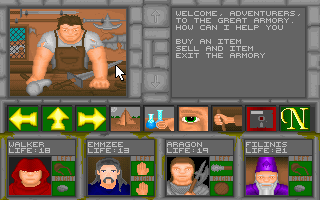
Daymare 2 (apparently Daymare 1 was for the Atari ST computer) is a traditional first person RPG. Although it looks simplistic it does include some nice features, like an auto-generated map and mouse control. There's not much story (you are supposed to kill an evil wizard or something) but if you enjoy old-school RPG type games you'll probably find a lot to like here.
Making the famous DOOM 3D shooting game into a RogueLike, turn-based RPG game with text "graphics" sounds like the recipe for disaster. But this RPG based on the original DOOM games actually plays very well. While more simplistic than games like Nethack or ADOM, DOOMRL focuses more on combat (of course!) and weaponry, so it is faster paced than more traditional RogueLike games. Quite innovative and surprisingly good, a definite must-play for fans of the text-based RPG subgenre.
Dungeon Crawl is a Roguelike game in the spirit of Rogue, Nethack, ADOM and many others. The game is continually being refined and improved by "a small group of developers". I didn't play it long enough to really discern what differentiates it from other games like Nethack, so if you're a fan of this genre, you'll have to play it for yourself. If you don't know what a "Roguelike" is, you might want to try Rogue or Nethack first.
Dungeons of Death is a first-person perspective role playing game, similar to classics like Dungeon Hack or Eye of the Beholder. The game's graphics are not great, but the gameplay is simple and intuitive. There is no long story or complicated control scheme. Attacking monsters is done by timing presses of the Spacebar, which is a lot tougher than it sounds! Overall a quick and enjoyable game, with maps randomly generated each time you play!
This is not a demo! It's the full version of this classic RPG game! It has been released by its original authors, and this is great news for all computer RPG fans. Similar to the more modern version Morrowind, this game has obviously worse graphics but some say its gameplay is still superior. It has a very open-ended and non-linear feel so if you enjoy that type of game, please do check out Elder Scrolls: Arena!
Hera is an old-school overhead RPG that is very similar to the original Ultima games. Using a simple system of keyboard commands you control your character, you are on some kind of quest ... probably involving the Sword of Rhin. The graphics are definitely old-school style, and there's no doubt that someone with a love for classic RPGs and a lot of patience may enjoy this game. (Hint: Press F1 during the game to bring up the help screen!)
Infernal Tome (episode 1, "Shardmoure Keep") is a classic-style 1st person RPG dungeon crawling game. Similar to classic computer RPGs like Dungeon Hack or Eye of the Beholder, the emphasis here is on finding your way out of the 3D-like mazes. Nice graphics and sound effects complement a well-done story introduction, making this game seem almost commercial-quality in its presentation. (HINT: Near the beginning of the game there is an object on the ground near the feet of one of the suits of armor that you have to pick up; it's grey and hard to see!)
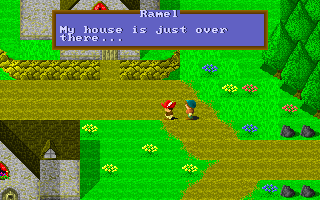
Joyous Rebel is a nearly-overhead perspective RPG that borrows its look from Ultima VI: The False Prophet (among other games). It is of course more simple in scope than Ultima, and its unique control scheme (which uses only a few keyboard keys to control all possible game actions) reflects this. But it has decent graphics and once you get used to the controls the game is surprisingly deep and challenging.
This is the sort of game that would only excite hardcore RPG gameplayers. It features poor graphics, no sound, little plot ... and lots of RPG exploring, killing, etc. Very much a stereotypical oldschool RPG.
Legend of Saladir is an interesting Roguelike game, and superficially seems very much the same as Rogue, Nethack and other similar games in the genre (ASCII graphics, random dungeons, fantasy theme, etc). However it does include some subtleties that set it apart from these other games. The first time I played I came across some of the monsters in the game fighting each other. The narration in the game also appears above par. However, probably only fans of the Roguelike subgenre will appreaciate this game, others should probably try Rogue or Nethack first.
Leygref's Castle is apparently a remake of an old BASIC game called Wizard's Castle. It features randomized dungeons like a Roguelike game but its gameplay is greatly simplified. You move around on floors comprised of 8x8 "rooms", each potentially containing an item or a monster, which you fight with simple Attack/Run prompts. A decent but simple game with basic text-mode graphics.
This Roguelike clone was the first Roguelike game I ever played! And man did I ever play it, for hours! I never got really far into the game (I sure died a lot) but it sure was fun ... imagine my excitement when I recently found it again (probably 10 years later) on the web! Compared to more recent games like Nethack and ADOM, MAG is lacking a lot of depth. However for someone new to the Roguelike genre of ASCII graphics and randomly generated dungeons, MAG could serve as a superb introduction.
If you're looking for a classic dungeon-crawl game along the lines of all of the old SSI RPG games (Eye of the Beholder, Dark Sun, AD&D, etc.) then you may enjoy this game. It has average graphics, and not a lot of story. But there is lots of classic hack'n'slash action here for computer RPG purists. (Note: The graphics looked a little weird on my screen no matter which option I picked at the beginning. Probably a problem with my video card. Try different options if the game doesn't look quite right for you.)
Mysterious Song borrows its style heavily from early console RPG games made by Square and Enix. (If you've played any of the Final Fantasy Super NES games, you'll be at home here.) The story and gameplay are basically standard fare, but if you enjoy RPG games and are looking for a new adventure to play, this could be a good choice.
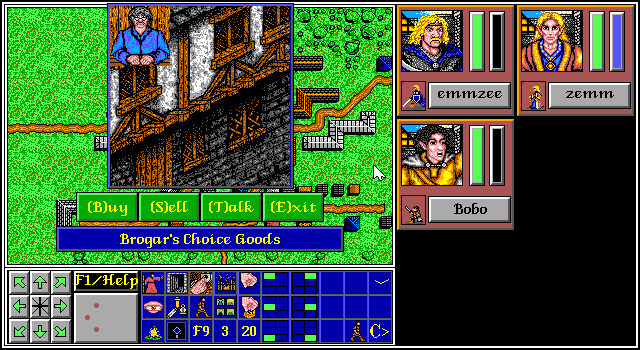
Despite it's name, this game does NOT involve any type of computer "hacking". It's actually my favorite "Roguelike" game. While it may take awhile to learn all of the different commands, the game itself is very deep and involving. Plus, it's different each time you play. Unlike most Roguelikes, Nethack also features optional VGA graphics. (Check 'em out in the screenshot. To learn how to get VGA graphics in Nethack, read our FAQ!) This is one of the few games that I come back to play over and over, so I suggest you try it! (Check nethack.org for special Windows/Linux/WindowsCE/other versions!)
Another "roguelike" role-playing game, Ragnarok gets extra points for using actual graphics instead of the usual ASCII characters used in most other similar games. The gameplay of Ragnarok involves exploring the gameworld, building experience, collecting items, etc ... all of which (like Rogue, Nethack, etc.) are randomly generated each time you begin a new game. The story is also a bit deeper than most games of this type, and you can use your mouse to control some aspects of the game.
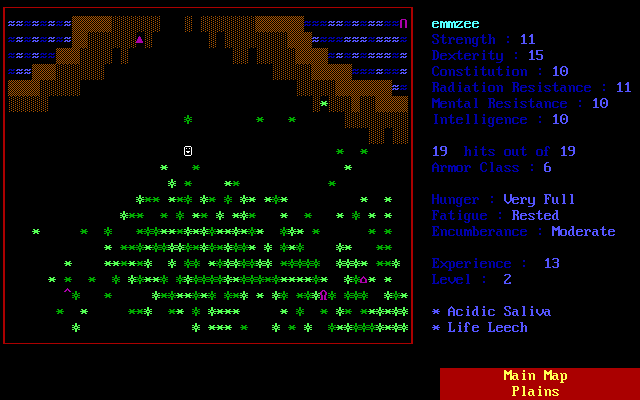
This is another Roguelike game, however, this game has a more futuristic theme. You're still exploring maze-like caverns, but here you must watch your oxygen levels, and collect various plants while avoiding or fighting various monsters. Of course, the levels are randomly generated each time, so it's never the same twice. The graphics are char edited ASCIIs, so they're slighly better than Rogue or Nethack. Seems pretty indepth!
The original "Roguelike"! It may have primitive graphics (ASCII), and no sound, but it's still quite enjoyable. People love these sorts of games because they're so indepth, and different every time you play. Check out this one to see a piece of gaming history, or are looking for a simpler alternative to super-indepth games like Nethack or ADOM ... but generally I still prefer Nethack (above).
Telengard is one of the earliest graphical RPGs ever released for personal computers. Starting life on the Commodore PET and Apple II, it was eventually ported to PC around 1985. The game now seems very dated, but still features somewhat unique gameplay, CGA graphics, and a sometimes odd sense of humor. (The original author has released this game for free.)
Another Roguelike. This one is very indepth, and includes many different features that make it involving to play, such as the huge variety of classes, locations, etc. Personally, I still prefer Nethack, even though the graphics for URW seem pretty good (for a Roguelike). Check it out if you're a fan of long, involving RPGs.
Walls of Bratock (or just "Bratock") is a very old-school overhead RPG which closely sticks to the conventions of the genre. Fantasy storyline, block graphics, and turn-based battles are the order of the day here. There are some annoying parts, like the overly lengthy introduction, and the 30-second "shareware reminder" screen (!) but the game itself plays decently enough for fans of hardcore old-school PC RPGs.
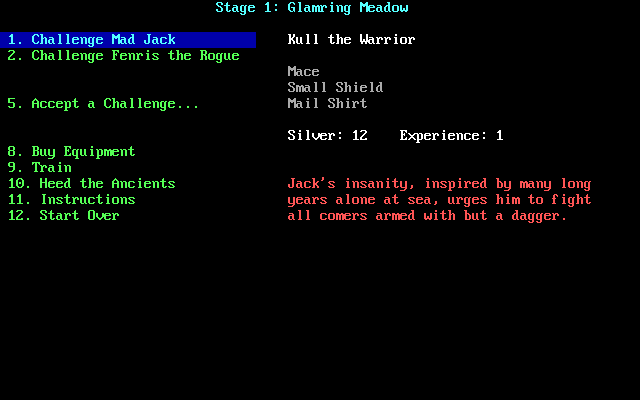
Wizard's Lair is an ASCII RPG game that is surprisingly indepth given its simple appearance. It plays similarly to classic Roguelike games (like Rogue or Nethack) but this game is not random. It includes many people to talk to, shops to buy items, and a large world to explore. It doesn't look very pretty, and it is definitely for hardcore RPG players only, but if you are looking for a difficult, indepth game and aren't put off by a high learning curve, you may enjoy Wizard's Lair!
Wraith is a simplistic RPG in some respects, and rather advanced (for its time) in others. The view is a three-quarters overhead perspective (like certain Ultima games) and the gameplay is, for the most part, standard RPG fare. Graphics and sounds look pretty good. (Notes: Run SETUP.EXE after unzipping, and then run WRAITH.EXE to play the game. See the included README.TXT for more game instructions.)
Marketed by IBM as an adventure game, Zyll is a text-based RPG with randomized elements where the object is to retrieve the "Black Orb". After choosing your class (warrior/thief/wizard) your adventure begins, and you are given various action options as you proceed. Because it was designed for old XT-style keyboards, it uses the F1-F8 keys for all/most commands. (See a diagram of the layout of the function keys. They correspond to the 8 options at the top of the screen.) By modern standards it's pretty basic, but at the time it was considered innovative.